plan.strategique [at] hec.ca (plan[dot]strategique[at]hec[dot]ca)
Image

Home
The 2024-2027 Strategic Plan maintains and refines the orientations that have guided HEC Montréal’s activities in recent years. To execute the plan, the School will draw on its entrepreneurial culture and its community’s engagement more than ever before.
An inspiring plan guiding the School’s actions (video – in French)
2024-2027 Strategic Plan.
Our true north: Provide an enriching experience throughout each student’s academic journey and contribute to the advancement of management knowledge, drawing on our entrepreneurial culture.
Our Strategic Plan is rooted in continuity. Twelve meaningful verbs express this intention: grow, increase, enrich, enhance, strengthen, ensure, maintain, revise, improve, continue, institute, and consolidate.
Living up to our values:
- Boldness
- Rigour
- Relevance
- Engagement
- Respect
- Collaboration
3 strategic themes:
- Enhance our impact on society
- Enrich the student experience
- Cultivate an open and stimulating environment
In response to the challenges of a world in transformation
“This plan underpins our will to be increasingly attuned to the needs of society, continue striving for excellence, centre students in our actions, and enhance our impact on society.”
–
Federico Pasin, Director General of HEC Montréal

Questions or comments
Our mission
Building on our excellence in teaching and research, HEC Montréal is a French-language institution that is open to the world and solidly rooted in Quebec society, that trains management leaders who make a responsible contribution to the success of organizations and to the sustainable transition of society.
HEC Montréal’s mission is achieved through:
- Constantly evolving pedagogy that is adapted to different types of learners
- Training that responds to current societal issues
- High-level research that has an impact on the community
- Committed and bold work teams and faculty
- Efficient and rigorous resource management
Our vision
Be a hub of management knowledge that inspires, innovates, and is known worldwide for:
- the quality and relevance of its teaching and research
- influence and involvement in local, national, and international communities
- its humane, responsible, and collaborative approach.
HEC Montréal’s vision is reflected in:
- A world where teaching and research contribute to the responsible conduct of business
- A campus environment that is caring, respectful, and increasingly inclusive
- An environment that encourages collaboration and creation
- Influence unconstrained by borders
Our values
Relevance
We meet the needs of our various stakeholders, both at home and abroad, taking into account advancements in knowledge and technology and evolving sustainable development issues.
Rigour
We apply integrity and rigour in all our teaching, research, and knowledge transfer activities and in managing our School.
Boldness
We rely on our innovative mindset and agility to cope with change and meet challenges. Our proactive approach and strong entrepreneurial culture help us devise new solutions and carry out visionary, ambitious plans.
Engagement
We promote concrete individual and collective engagement in the business community, academia, and society. This active contribution demonstrates the HEC Montréal community’s energy, ethics, and social responsibility.
Respect
We endeavour to create a healthy and inclusive environment that respects others and is open to differences, one that fosters collegiality and pride in belonging.
Collaboration
We encourage interaction among the members of our community, to promote the sharing of ideas, interdisciplinarity, and the development of collective intelligence.
Our true north
Provide an enriching experience throughout each student’s academic journey and contribute to the advancement of management knowledge, drawing on our entrepreneurial culture.
True north is a statement of objectives that expresses a common goal for all employees. It helps our organization maintain its strategic course and improve. Everyone can refer to this statement to evaluate their contribution to accomplishing the Strategic Plan.
Questions or comments
The strategic plan revolves around 3 themes and 12 objectives.
3 strategic themes
- Enhance our impact on society
- Enrich the student experience
- Cultivate an open and stimulating environment
12 strategic objectives
Strategic objectives that are specific, measurable, appropriate, realistic, and time-bound (SMART) were defined.

Enhance the value, quality, and relevance of learning and training as perceived by learners and other key stakeholders

Increase the impact of our research on society

Enhance our students’ knowledge and skills so that they become responsible leaders

Raise HEC Montréal’s profile, particularly in priority target markets

Increase our ability to attract and retain faculty and the talent needed to fulfill the School’s mission

Ensure the School’s financial stability

Maintain the accreditation renewal success rate

Review key administrative processes to achieve productivity gains

Enhance the student experience

Continue to enhance employee experience

Establish exemplary governance

Strengthen the School’s roots in the downtown core

“Our faculty members are recognized for their excellence in teaching and research. It is our duty to support them effectively in their development and ability to innovate.”
–
Marc-Antonin Hennebert, Director, Faculty Affairs

“With this plan, we will increase our impact and leadership in research in key areas for society and where we can make a real difference.”
–
Caroline Aubé, Director, Research and Knowledge Transfer

“We must continue to stand out, here and around the world, with relevant training and innovative teaching approaches, meeting peoples’ needs throughout their careers.”
–
François Bellavance, Director, Academic Programs
Questions or comments
The School’s talents and resources will be harnessed to carry out this ambitious plan, based on these key success factors.
Human resources
Attract, develop, hire, and retain talented faculty and staff to support the School’s mission.
Communications
Develop consistent communication initiatives that are appealing to internal and external communities and that reflect our strategic priorities.
Information technology resources
Invest in the School’s information technology resources, in line with its strategic priorities, to support our innovation in the fields of digital technology and data.
Spaces and infrastructure
Manage the development of the School’s spaces, its infrastructure, and the campus environment, in keeping with the Strategic Plan.
Finance
Explore new revenue sources, enhance analysis and oversight, in order to optimize ressource allocation and sound management of operations and projects.

“HEC Montréal wants to mobilize its teams around the strategic priorities by harnessing information technology as one of the vectors of innovation that will enable us to achieve our ambitions.”
–
Alexandre Auger, Director, Information Technology

“The Strategic Plan will give us the tools to better promote HEC Montréal, its initiatives, and achievements, and to expand the School’s reach outside Quebec.”
–
Natalie Roussel, Director, Communications and Government Relations

“Let’s continue to leverage our wealth of talent in support of a strategic plan aimed at making HEC Montréal a healthy, harmonious, and increasingly inclusive workplace.”
–
Isabelle Faucher, Director, Human Resources
Questions or comments
Implementation of the Strategic Plan is supported by the action plans of each office. SMART objectives and specific indicators are used to closely monitor progress in achieving these objectives.
Key indicators monitored
- Gross and weighted number of full-time equivalent (FTE) students
- Satisfaction rate for paths of study
- Student persistence rate
- Alumni satisfaction rate for career goal achievement
- Percentage of students who receive a TASK certificate by SULITEST score above 70% before graduating
- Percentage of government plans for success and mental health achieved
- Total amounts the School has received in research funding, number of partnership agreements, and the amounts of these agreements
- International rankings (general, programs, research, employability, and sustainable transition)
- Accreditation (AACSB, EQUIS, AMBA) and designation (Ashoka U Changemaker Campus) renewal rates
- Number of faculty members among the most influential in their field (as ranked by Stanford University and publisher Elsevier)
- Percentage of reduction in the School’s carbon footprint based on scopes 1, 2, and 3
- Number of events held, by type, in the Hélène-Desmarais Building, and number of attendees

"We will continue to develop governance practices that promote integrity, equity, and care. Our second EDI action plan will also help make our campus even more inclusive."
–
Johanne Turbide, Secretary General

“HEC Montréal is showing through the implementation of its strategic plan that rigour is one of its core values. This is further evidence of its will to promote sound management and good governance.”
–
Piero Greco, Director, Finance Office
Questions or comments
Strategic plan achievements are presented in January each year.
An Achievement Fair was also held in May 2025. The event brought together the HEC Montréal community to highlight our achievements and lessons learned, and to celebrate our progress. It was an opportunity to take stock of the scope and variety of work being done at the School, encompassing administrative, teaching, research, and transfer activities.
Image

Questions or comments
HEC Montréal is updating its Strategic Plan, continuing the process initiated in 2019. This new plan covers the period of 2024-2027 and enables the School to focus on its priorities with greater precision. Its progress is closely monitored by a management system that includes specific indicators.
Drafting the Strategic Plan
In late 2019, HEC Montréal analyzed all the data gathered during a rigorous preparation process and extensive consultation. This analysis led to the production of the 2020-2023 Strategic Plan. The plan was then submitted to the School’s Academic Council and Board of Directors for approval.
In the spirit of continuity, the Executive Committee decided to focus on 3 strategic themes for the 2024-2027 plan. This approach made it possible to organize the School’s priorities with greater precision, in line with HEC Montréal’s mission and vision.
A consultation process that began in 2019 and continues today
In 2019, we had the opportunity to talk with our entire community and various partners by organizing codesign workshops and seeking comments on several themes. Consultations have since continued on important topics for the School and its community, such as Sustainable Development, Corporate Social Responsibility, and Ethics (SD-CSR-ethics), EDI, and the research and transfer strategic plan.
Video: Strategic planning timeline (in French)
This video presents the timeline of the strategic planning process that HEC Montréal carried out in 2019 and 2020.
- June 2019 – Director Federico Pasin takes office
- Summer 2019 – Preparatory work on strategic priorities
- September 2019 – website launch – strategic planning
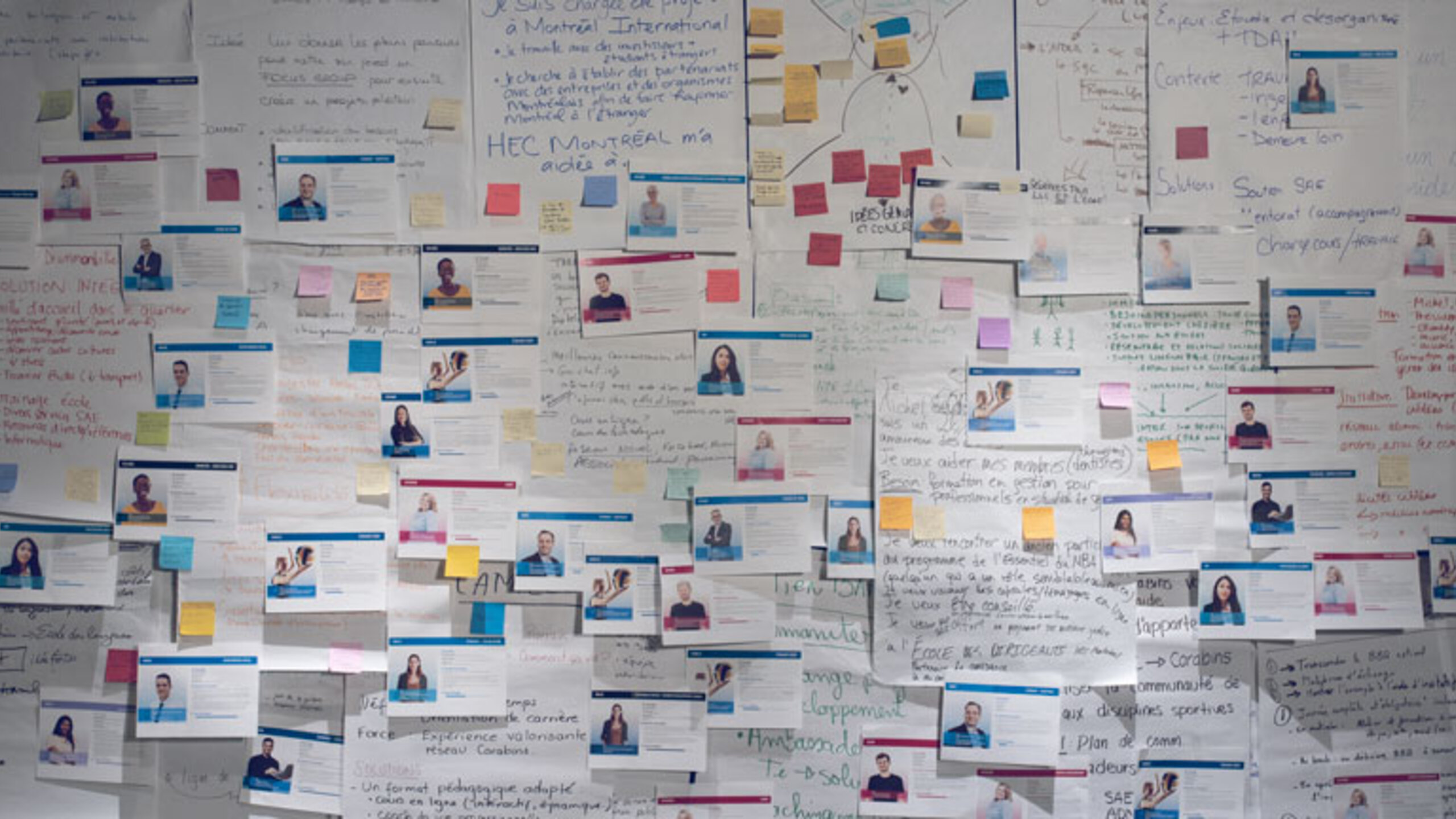
- Fall 2019 – Public consultations: 9 codesign workshops (384 attendees, 91 personas analyzed, 7 themes)
- December 2019 – Analysis and drafting of strategic plan
- Winter 2020 – Work of various governance bodies (Strategic Planning Coordination Committee, Strategic Planning Advisory Committee, Faculty Assembly, Academic Council, Executive Committee)
Workshops held as part of the strategic planning
In fall 2019, codesign workshops were held at the School on strategic topics such as:
- The HEC Montréal student experience and path (from applicant to graduate)
- HEC Montréal as a living and working environment
- The HEC Montréal brand: our identity and reputation
- HEC Montréal in the community
- HEC Montréal: a key player in the management of social and environmental issues
- Research and knowledge transfer at HEC Montréal
- HEC Montréal, my alma mater
The School also held meetings for employers and employees who play a specific role at the School, such as full-time lecturers, and employees of the Registrar’s Office.
Participation in the 2019 workshops
There were 2 complementary ways in which community members and partners could participate: by taking part in a codesign workshop or by sending us their comments. This let them contribute to the reflection process that would inform the Strategic Plan and the action plans stemming from it.
Codesign workshops
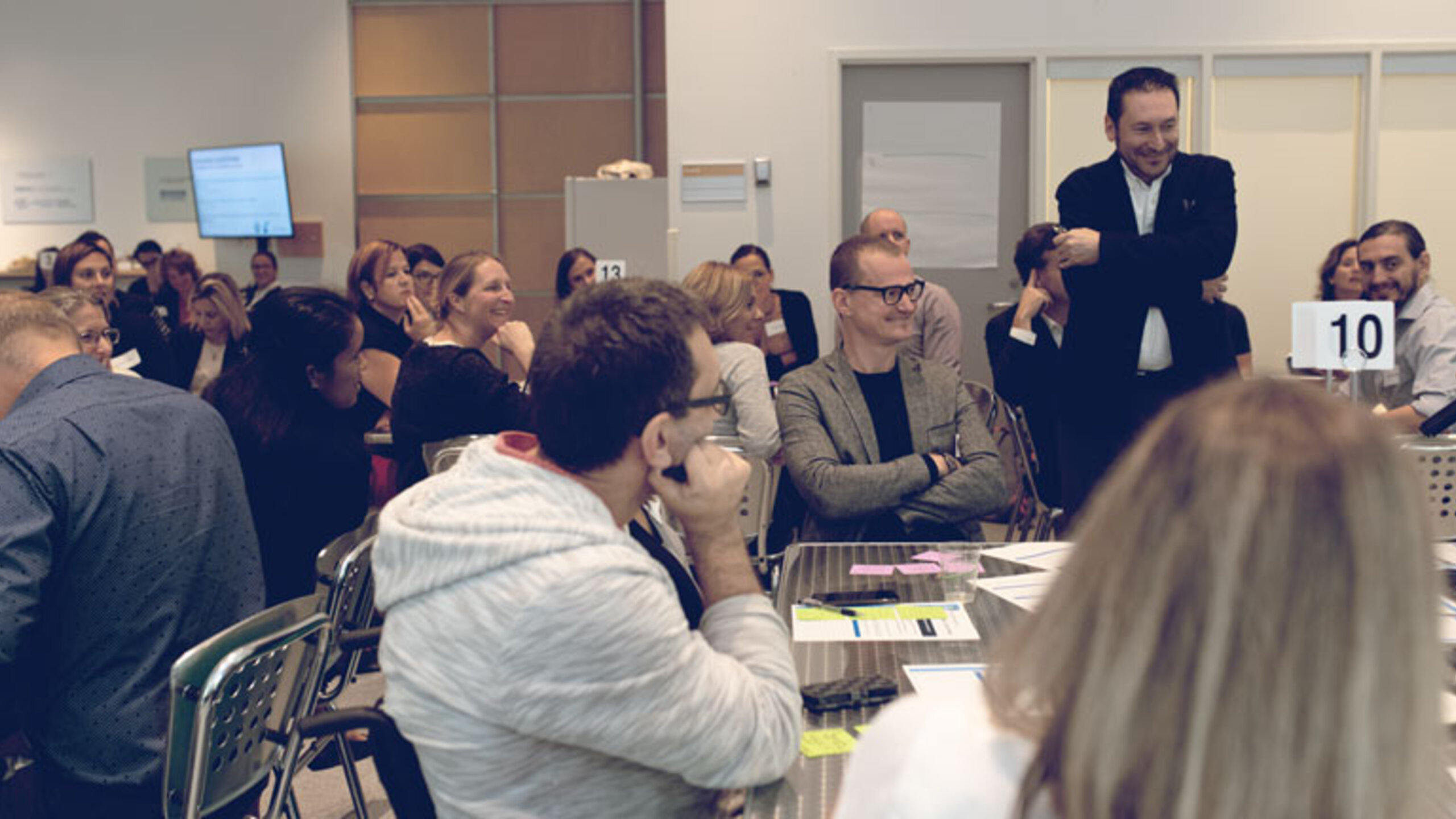
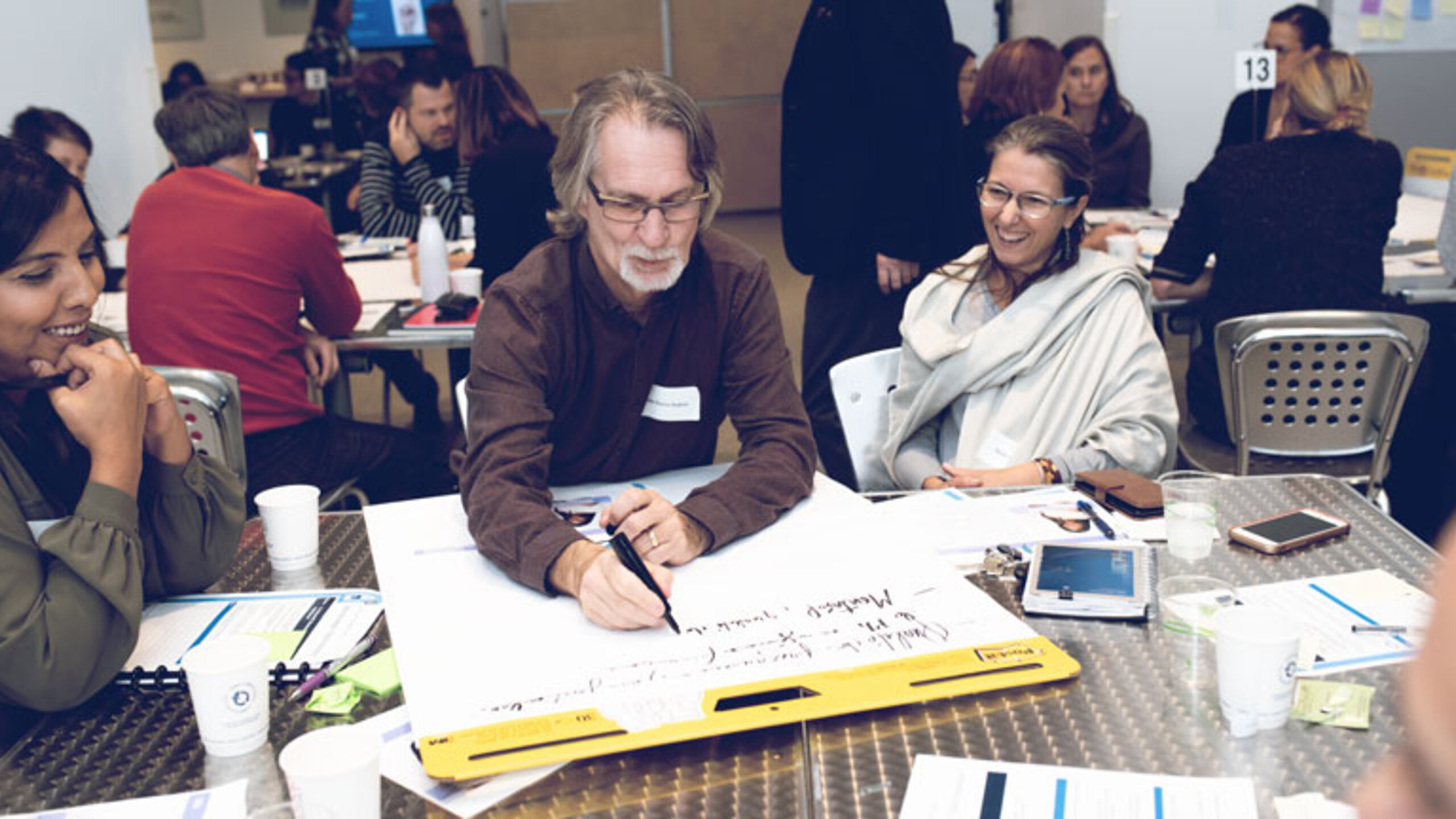
The codesign workshops, based on collaborative innovation, were an original way of consulting stakeholders. They gave us a better understanding of everyone’s needs and enriched our future initiatives.
Led by: Mosaic, the HEC Montréal hub specialized in creativity and innovation management.
Caption
9 codesign workshops were led by Mosaic, a hub specialized in creativity and innovation management.

Caption
Nearly 300 people took part in the consultations.
Caption
7 themes were discussed, deepening our understanding of needs.

Caption
58% of those present were professors, teaching staff, and School staff.

Caption
27% were HEC Montréal donors or alumni.
Caption
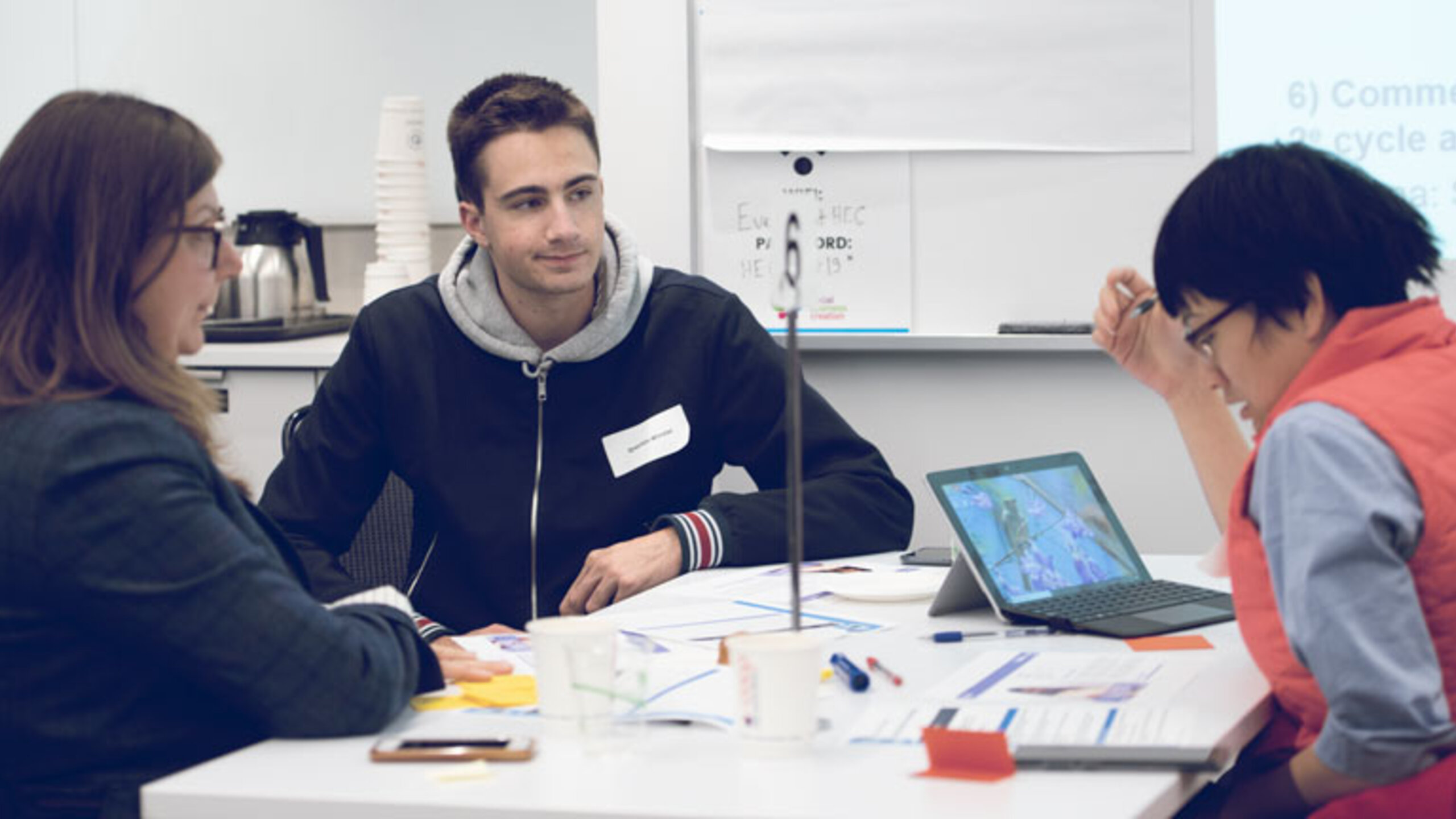
9% were members of the HEC Montréal student body.

Caption
Participants in the workshop “HEC Montréal: a key player in the management of social and environmental issues.”
Caption
3,280 ideas were shared during the consultation.

Caption
The collected data were analyzed and taken into account in the production of the Strategic Plan.

Caption
Consultations are ongoing around important themes for the School and its community.
The consultation in figures
- 384 attendances (275 people)
- 9 workshops on 7 themes
- 14 issues addressed
- 3,280 ideas shared
As part of the consultations, 83 participants also took part in other meetings involving employees from various departments of the School as well as employers.
Who attended?
- Members of the HEC Montréal student community and their parents (9% of participants)
- Faculty members, teaching staff, and staff members of the School (58%)
- Alumni and donors (27%)
- Business community members and partners (6%)
Governance
Several HEC Montréal entities were involved in preparing and approving the strategic plan.