Faculty
The State of Energy in Quebec 2020: oil consumption still climbing
January 21, 2020
Unless it makes a drastic shift, Quebec will not be able to meet its targets for reducing petroleum product consumption and greenhouse gases emissions by 2030. So says the État de l’énergie au Québec 2020, an annual overview published on January 17 by the HEC Montréal Chair in Energy Sector Management.
“Current energy trends in Quebec are not reassuring,” worries the Chairholder, Pierre-Olivier Pineau. “Despite a number of significant initiatives, including transport electrification, the development of biofuels and electrolysis projects for producing hydrogen, Quebec continues to increase its consumption of petroleum products (+10% from 2013 to 2018) and there has been no decline in its greenhouse gas emissions since 2014.”
Growth in sales of petroleum products
Sales of light trucks in Quebec once again reached new highs, as did gasoline sales – exceeding 10 billion litres consumed in one year for the first time. This comes in spite of growth in sales of electric vehicles and the installation of recharging stations.
If the trend over the past six years (2013–2018) continues, total sales of petroleum products in 2030 will be 32% higher than in 2013, while the target is to reduce them by 40% as compared with 2013 figures.
“Steps now being taken, including the carbon market, are helping Quebec reduce its use of fossil fuels and its greenhouse gas emissions, but are not enough. To succeed in making this shift, we must focus on transitioning to an economy that minimizes consumption and wasted energy, improves its energy productivity and encourages the circular economy,” emphasizes Pineau.
Some highlights of the 2020 overview
- All regions of the province saw a continuing increase in the number of vehicles per 1,000 inhabitants and a higher proportion of light trucks (the number of cars is falling everywhere).
- In 2018, sales of electric vehicles (EVs) and plug-in hybrid vehicles (PHVs) represented 3% of total new automobile sales in Quebec, while trucks and cars represented 64% and 33% of the total, respectively.
- Since 2015, the supply of petroleum products from Canadian and American sources has increased considerably: 38% from western Canada and 62% from the United States.
- The total floor area of residential and commercial buildings continues to grow, limiting energy consumption gains in this sector.
- Quebec remains the province where electricity prices are lowest for residential and industrial consumers; as a result they are the largest consumers of electricity in Canada.
- While electricity consumption has remained stable for 10 years, peak consumption has been increasing, making the need to manage peak demand periods clearer than ever.
- Some green hydrogen-production projects (Air Liquide, Enerkem) have been announced, ushering in the development of a new carbon-free type of energy, particularly in industry.
- The production of renewable natural gas is mentioned for the first time in this year’s overview, and could contribute, however modestly, to decarbonizing the province’s energy system
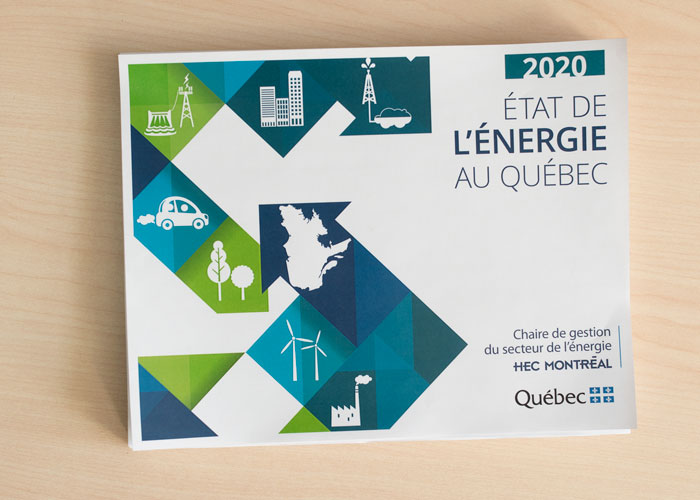
The 6th edition of The State of Energy was written by Johanne Whitmore and Pierre-Olivier Pineau, produced in collaboration and with the financial support of Transition énergétique Québec.